
Cetirizine: Uses, Interactions, Mechanism of Action – DrugBank
Cetirizine: Uses, Interactions, Mechanism of Action – DrugBank Generic Name
- Cetirizine
- DrugBank Accession Number
- DB00341
- Background
- Cetirizine, also commonly known as Zyrtec, is an orally active second-generation histamine H1 antagonist proven effective in the treatment of various allergic symptoms, such as sneezing, coughing, nasal congestion, hives, and other symptoms 1, 2.
One of the most common uses for this drug is for a condition called allergic rhinitis. The prevalence of allergic rhinitis in the United States is about 15% according to physician diagnoses, and up to 30%, according to self-reported nasal symptoms. Allergic rhinitis is associated with multiple missed or unproductive days at work and school, problems with sleep, and other difficulties with day to day activities for many individuals 3. Furthermore, some antihistamine agents that are used to treat this condition cause undesirable, sedating effects 4.
Cetirizine is one of the first second-generation H1 antihistamines (SGAHs) formulated to selectively inhibit the H1 receptor without sedating effects 2.
- Modality
- Small Molecule
- Groups
- Approved, Investigational
- Structure
-
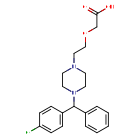
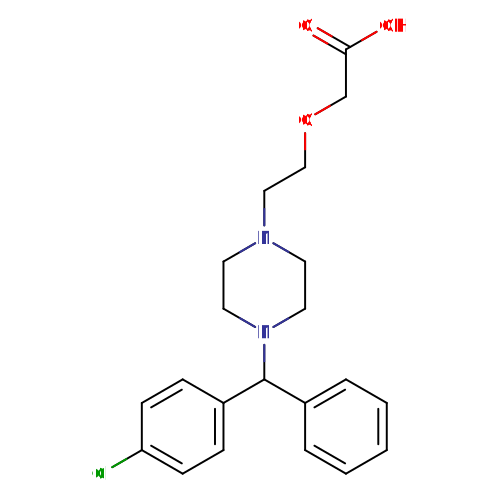
- Weight
- Average: 388.888
Monoisotopic: 388.155370383 - Chemical Formula
- C21H25ClN2O3
- Synonyms
-
- Cetirizin
- Cetirizina
- Cetirizine
- Cetirizinum
- External IDs
-
- AC-170
.